State funding builds on the philanthropic bridge that’s sustained local news in recent years, giving newsrooms more stable footing.
Local news is dying across America — everyone knows that by now. But California is betting on two bold experiments to help reverse the trend.
The first is the California Local News Fellowship, the nation’s largest publicly funded journalism initiative, based at UC Berkeley. Spearheaded in 2022 by then-state Sen. Steve Glazer with an initial $25 million, the program has placed more than 110 journalists in newsrooms across California since its 2023 launch — reporters who have since produced more than 10,000 stories that might otherwise have gone untold. The state’s latest budget extends the fellowships through 2028.
The second is a more direct reckoning with the tech companies that helped cause the crisis in the first place. The California Civic Media Fund is a first-in-the-nation public-private partnership, administered by the Governor’s Office of Business and Economic Development, that channels direct financial investment into local newsrooms. The fund matches $10 million in state money with $10 million from Google — the product of a legislative settlement reached with Google after lawmakers had originally proposed forcing tech giants to fund local journalism subsidies directly.
(On July 14, Gov. Gavin Newsom announced that the state and Google would each double the original commitment to the Civic Media Fund. “Every Californian deserves access to accurate, trusted information. By investing in local newsrooms, California is bolstering the journalism that keeps communities across the state informed, connected and engaged,” Newsom said.)
These state-funded initiatives will channel taxpayer money into local newsrooms across the Golden State — a tacit admission that the market alone won’t save an institution essential to informed communities, government accountability, and civic life.
The premise is straightforward: local journalism is a public good worth defending, even with public dollars.
The crisis these programs are meant to address didn’t happen by accident. For years, Big Tech — Google, Meta, and others — built advertising empires worth hundreds of billions of dollars in part by distributing links, snippets, and headlines that local newsrooms spent real money producing, without paying for that content or sharing meaningfully in the revenue it generated.
Readers followed the platforms; advertisers followed the readers. Billions of dollars in ad spending that once sustained local papers and other news sites got rerouted to Silicon Valley instead.
The result is visible in every corner of the state: gutted newsrooms, vanishing beat reporters, and whole communities left as “news deserts” — places where no one is left to cover the school board, the city council, or the local water district. Democracy doesn’t function well in the dark, and California has increasingly been flying blind at the local level.
Now California is betting that public funding can slow, or even reverse, that collapse. As one of the first states to intervene at this scale, its experiment is being watched closely — by other statehouses, and by federal policymakers who have so far mostly watched the same crisis unfold from the sidelines.
California’s journalism initiatives will help address the long-term decline of local newspapers, but their overall impact is likely to be modest. These programs can provide much-needed funding for reporting and community news, but they cannot fully reverse decades of shrinking newsrooms and lost advertising revenue.
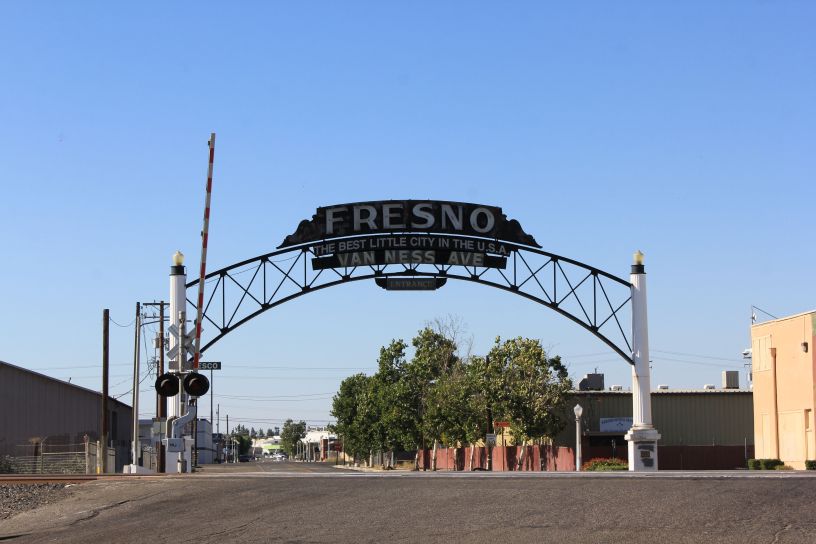
My former newspaper, The Fresno Bee, illustrates the scale of that decline. It once had roughly 200 people in the newsroom alone — editors, reporters, photographers, copy editors, and other support staff — and employed nearly 900 people overall, including staff in the pressroom, advertising, circulation, and marketing. At the time, that was fairly typical for a midsize American newspaper. Today, the Bee reportedly has only about 10 employees. That drop reflects how deeply local journalism has been hollowed out, not just in California but across the country.
State initiatives can help preserve essential local reporting and keep some newsrooms operating, but they can’t replace the hundreds of journalists and support staff who’ve disappeared from local papers over the past few decades. Rebuilding strong local news organizations will take sustained investment, sustainable business models, and continued support from readers, communities, and public institutions.
Philanthropic funding has become essential to keeping many local news organizations alive. As advertising revenue has dried up and subscriptions alone can no longer sustain most newsrooms, foundations, nonprofits, and individual donors have stepped in to fill the gap — enabling outlets to hire reporters and cover city halls, school boards, and neighborhoods that might otherwise go unreported. Philanthropy isn’t a permanent fix, and it can’t substitute for a sustainable business model, but it has become a vital bridge, giving local news organizations the time and resources they need to keep serving their communities.
In one sense, California’s journalism initiatives can be understood as an extension of this philanthropic model — a public-sector complement to the foundation and donor support that has already been propping up local news. Like private philanthropy, state funding offers a bridge rather than a permanent fix: it can help newsrooms hire reporters and sustain coverage in the near term, but it doesn’t resolve the underlying collapse of the advertising-driven business model that once funded newspapers like the Bee.
Real recovery for local journalism will likely depend on some combination of all these sources — state support, philanthropy, reader revenue, and new business models — working together over the long haul, rather than any single initiative solving the problem on its own.
(This column has been updated).

