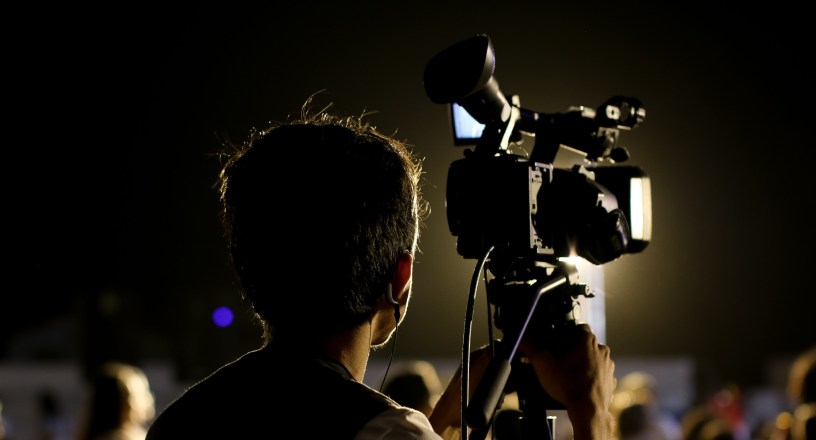
Through workshops, presentations, and community events, the Institute for Media and Public Trust supports media literacy efforts and helps the public better understand today’s media landscape.
Eight years ago, when we launched the Institute for Media and Public Trust at Fresno State, misinformation, media literacy, and declining trust in institutions were already recognized as serious concerns—but for many, they were not yet seen as existential challenges. There was a widespread belief that false information would eventually be corrected, that a well-informed public would be able to separate fact from fiction, and that trust in institutions would largely stabilize on its own.
That optimism has not held.
Instead, these challenges have deepened and evolved. Advances in technology—particularly the rapid rise of artificial intelligence—have made the creation and distribution of false or misleading information faster, cheaper, and more convincing than ever before. What once seemed like a problem of correction and clarification has become a far more complex struggle over verification, credibility, and shared reality.
The consequences extend well beyond journalism or the media industry. When people lose confidence in the information they encounter, it becomes harder to sustain meaningful civic dialogue, to make informed decisions, and to find common ground on issues that shape our communities. Trust is not a peripheral concern in democratic society—it is its foundation. Rebuilding and sustaining that trust is among the most urgent challenges of our time.
Never before has it been so easy to create and distribute information. And never before has it been so difficult to determine what is authentic, credible, and worthy of belief.
That reality only strengthens the mission that led to the creation of the Institute. The need for trustworthy information has not diminished over time—it has grown more urgent.
The Institute’s work has been made possible through the generous support of the James B. McClatchy Foundation, the California Endowment, the California Health Care Foundation, Microsoft, and hundreds of individual donors. This support has been essential to sustaining and expanding our mission, and we are deeply grateful for it.
We continue to believe that a healthy democracy depends on an informed citizenry, robust and independent journalism, strong First Amendment protections, and the ability of individuals to critically evaluate the information they consume. These principles guided our work at the outset, and they remain central as we mark the Institute’s eighth anniversary.
From the beginning, our work has focused on turning these principles into practice.
We have partnered with the California Media Literacy Coalition and delivered media literacy programming across the Central Coast and the San Joaquin Valley. We have supported student journalism internships that provide real-world experience and help prepare the next generation of reporters and storytellers. We established a health reporting fellowship to strengthen coverage of issues that directly affect community well-being in the San Joaquin Valley. We have hosted public programs examining the importance of the First Amendment, provided safety training for journalists working in increasingly complex environments, and convened conversations on the role of science reporting at a time when scientific evidence and expertise are too often questioned or politicized.
A central focus of our work has been building pathways into the profession and strengthening the journalism pipeline. Through initiatives such as the “Journalists of Color” program, we have provided workshops, mentorship, and hands-on reporting opportunities designed to diversify newsrooms and support students pursuing careers in journalism.
Taken together, these efforts reflect a core belief: strengthening public trust requires more than diagnosing problems. It requires sustained investment in people, in journalism that serves the public good, in civic understanding, and in spaces where meaningful dialogue can take place.
When I first had the idea of starting the Institute, I needed institutional support to bring it to life—and I found that support within the College of Arts and Humanities at Fresno State and my own department, the Media, Communications, and Journalism Department.
Their backing was critical. It provided not only practical resources and administrative pathways, but also legitimacy. It signaled that the Institute was not simply an individual initiative, but a serious academic effort aligned with the university’s mission and public service role. That endorsement helped secure the approvals, partnerships, and infrastructure necessary to move from concept to reality.
Equally important was the creation of an advisory board composed of journalists, educators, and other experts in the field. Their guidance has kept the Institute grounded in real-world practice. They have brought professional insight, credibility, and industry perspective, ensuring that our work remains connected to the evolving realities of media and communications.
Together, institutional support and advisory leadership established a strong foundation—one that bridges academia and professional practice and enables the Institute to remain relevant, responsive, and forward-looking.
Rather than retreat from technology or succumb to cynicism, the path forward requires strengthening the skills, institutions, and relationships that help communities navigate an increasingly complex information environment.
Media literacy must be understood not as a single educational milestone, but as a lifelong civic competency. People of all ages need the ability to evaluate sources, recognize manipulation, understand how information is produced, and make informed judgments about what they consume and share.
Journalism carries a parallel responsibility. News organizations must continue to uphold rigorous standards of accuracy, transparency, and accountability. Trust is built over time through consistent performance, openness about errors, and an unwavering commitment to the public interest.
At the same time, educational institutions, community organizations, technology companies, policymakers, and citizens all share responsibility. No single sector can address these challenges alone. Rebuilding trust will require collaboration, shared purpose, and sustained commitment to the public good.
Artificial intelligence will continue to reshape how information is created, distributed, and consumed. While it introduces significant risks, it also offers opportunities to expand access to knowledge and strengthen civic participation. The task before us is to ensure that these tools are developed and deployed in ways that are guided by ethical principles and grounded in transparency and truth.
As the Institute enters its ninth year, we remain committed to advancing research, supporting journalism, fostering dialogue, and strengthening media literacy. The challenges before us are greater than we imagined eight years ago, but so too is the urgency of this work.
The future of democratic society depends not only on access to information, but on confidence in its integrity. Rebuilding that confidence will take time, persistence, and collective effort—work that no single institution or generation can complete alone.

